2026 Season Schedule & Trip Descriptions
© Jeremy Cushman
Multi-Day Trips
April 25-26 / Fillmore County & April 27-28 / Olmsted County
May 14-15 / Freeborn County & May 16-17 / Steele County
May 22-23 / Mahnomen County & May 24-25 / Clearwater County
June 8-9-10 / Koochiching County
June 23-24-25 / Washington County
September 4-5 / Pope County & September 6-7 / Douglas County
October 3-4 / Otter Tail County & October 5-6 / Todd County
October 26-27 / Tofte / North Shore I & October 28-29 / Tofte/North Shore II
November 21-22-23 / Mississippi River Valley
2027
January 9-10-11 /Duluth/Northeastern MN
Multi-day trips are $45 per day. See trip descriptions below.
© Jeremy Cushman
Summer MBWednesdays
July 8 / Hennepin County
July 15 / Sherburne County
August 5 / Dakota County
August 19 / Ramsey County
Summer MBWednesdays are $25 per day. See trip descriptions below.
© Jeremy Cushman
© Jeremy Cushman
© Jeremy Cushman
Trip Descriptions
Click here to view a map of Minnesota by county
Registration for multi-day trips starts on Friday March 6 at Noon
Multi-Day Trips
April 25-26 / Fillmore County (p. 226) / $45.00 per day
On this early season trip to Fillmore County, in the Southeastern Region, there should be a mix of migrating waders, shorebirds, warblers, and sparrows available without necessitating a trip to Iowa. A visit to the Goethite WMA and Kappers’ Ponds will give us a chance to observe a variety of shorebirds and waterfowl which is often difficult in this part of the state. The trails at the Eagle Bluff Environmental Learning Center and Forestville State Park might yield a Tufted Titmouse or a Winter Wren. (Base: Preston)
April 27-28 / Olmsted County (p. 244) / $45.00 per day
While Olmsted County lacks a natural lake or a sewage pond, we’ll be kept busy searching the many reservoirs for waterfowl and shorebirds. This county boasts an impressive bird list with many avid birders located in Rochester and with a variety of good habitats. There are wooded county parks to search for migrants and breeding woodland birds. Some early possibilities include a spot for Acadian Flycatcher and Louisiana Waterthrush. (Base: Rochester.)
May 14-15 / Freeborn County (p. 222) / $45.00 per day
The sound of Bobolinks heard from the grasslands along the road in Myre Big-Island State Park was enough reason to stop the car on my last trip. I walked the grasslands and wet meadow for Henslow’s Sparrow, wrens, and flycatchers. This was before I rushed to the lake for waterfowl, herons, bittern, egrets, and American White Pelicans. Then off to the mature woods searching for 30 species of warblers. No wonder 230 species have been reported in the park with the various habitats available. And we still have the rest of the county to explore. Join this trip today if you want enjoy a wide variety of easily accessible birding locations. (Base: Albert Lea.)
May 16-17 / Steele County (p. 250) / $45.00 per day
This is spring migration in the central flyway of Minnesota. Steele yourself for the opportunity to see 230 species of woods and water birds including 28 species of warblers. In Rice Lake State Park alone. Then on to the restored Armstrong Wetlands for the chance at 28 species of shorebirds. You don’t need to be a county lister to enjoy this trip. Sign up today. (Base: Owatonna)
May 22-23 / Mahnomen (p. 114) & Norman (p. 116) Counties / $45.00 per day
With a single day in each county, we’ll be limited to the areas that we can cover in these Western Region counties. But we will visit the better locations in eastern Norman County and the southern portion of Mahnomen County. There are lots of WMA’s and SNAs with some quality grasslands. We’ll search for Grasshopper and LeConte’s Sparrows, Upland Sandpiper, and Marbled Godwits. There are also a few wooded parks to search for migrants. (Base: Mahnomen)
May 24-25 / Clearwater County (p. 381) / $45.00 per day
No trip to Clearwater County would be complete without some time spent at Itasca State Park. After visiting the wetlands and lakes in the northern portion of this long narrow Northeastern Region countysearching for breeding birds – Ruffed Grouse, Alder Flycatcher, and several warbler species, we’ll end the trip with a 1/2 day drive along the Wilderness Drive in Itasca State Park. In addition to over 20 species of warblers, there are locations that can be good for bitterns, waders, shorebirds, and waterfowl. (Base: Mahnomen)
June 8-9-10 / Koochiching County (p. 395) / $45.00 per day
Over three days, we will travel some of this county's least birded Forest Service Roads and explore some of Minnesota’s most remote expanses of bogs and coniferous forests. With 23 species of nesting warblers, including Cape May, Bay-breasted, Connecticut, and Mourning. We’ll also search for Black-backed Woodpecker, Yellow-bellied Flycatcher, and Boreal Chickadee. As on past MBWs to the county, we’ll focus on learning the songs of the nesting warblers and other passerines vocalizing on territory. (Base: International Falls.)
June 23-24-25 / Washington County (p. 311) / $45.00 per day
Washington County is considered one of the metro counties. However, it is a big county with two state parks, an extensive county park system, several conservation easements, and WMAs. Which is why we propose to tackle it in a section per day. It is a county where you can find grassland species such as Henslow’s, Grasshopper, Lark, and Clay-colored Sparrows. Plus, nesting warblers such as Prothonotary, Blue-winged, and Hooded. Plenty of other woodland birds – tanagers, orioles, thrushes are also present. With three days, we plan to spend one day each in the northern and southern portions and finish the last day exploring the center of the county. (Base: Woodbury)
September 4-5 / Pope County (p. 144) / $45.00 per day
This an ecologically diverse central Western Region county. Variety is the spice of life for this county. You can expect to bird prairie potholes for migrating shorebirds and waterfowl; wetlands for Marsh Wren, bitterns and rails; lakes for Western and other grebes, and waterfowl; grasslands for Upland Sandpiper, Lark and Henslow’s Sparrows. Finally, we will confirm that Eckert Lake is named after Kim. We will light a ceremonial fire and pay homage. You don’t want to miss this county trip. (Base: Alexandria.)
September 6-7 / Douglas County (p. 142) / $45.00 per day
Lake Osakis has a long history in Minnesota birding. We will explore the western edge looking for Western and Clark’s and other grebes which nest here as well as early waterfowl migration. And if they swim across the county line into Todd County as a newbie county lister you’ll get a two-fer. We will explore the edges and wetlands surrounding some of the other 200+ lakes looking and listening for bitterns, Sora, and wrens. In between we will stop at various parks including Lake Carlos State Park and/or Spruce Hill County Park to search for a wide variety of woods birds. (Base: Alexandria.)
October 3-4 / Otter Tail County (p. 126) / $45.00 per day
Depending on the weather leading up to the trip it will likely be peak migration for early rare regular birds, like Cinnamon Teal, Black-necked Stilt, Western Sandpiper, ibis and both egrets – Snowy and Cattle. Migrating hawks are possible too, with Ferruginous unlikely but possible. And if we’re lucky a Short-eared Owl will be flushing a Greater-prairie Chicken which are still resident in the county. Otherwise, we’ll create otter tails to tell. (Base: Wadena.)
October 5-6 / Todd County (p. 339) / $45.00 per day
MBW’s and the MOU advocate birding in lesser known and under birded parts of Minnesota. It’s important from a scientific and conservation perspective but also fun and interesting to see what might turn up and explore parts of the state you wouldn’t otherwise. And why can’t you be that person to find the second state record Common Eider and watch it swim to Otter Tail to become the first. This county is similar to Otter Tail but falls into the Southeast Region in the Birder’s Guide to Minnesota with greater habitat variations. Browerville Waste Treatment facility is a good location to find unusual water birds including scoters and Red Phalarope. (Base: Wadena.)
October 26-27 / Tofte / North Shore I / $45.00 per day
October 28-29 / Tofte/North Shore II / $45.00 per day
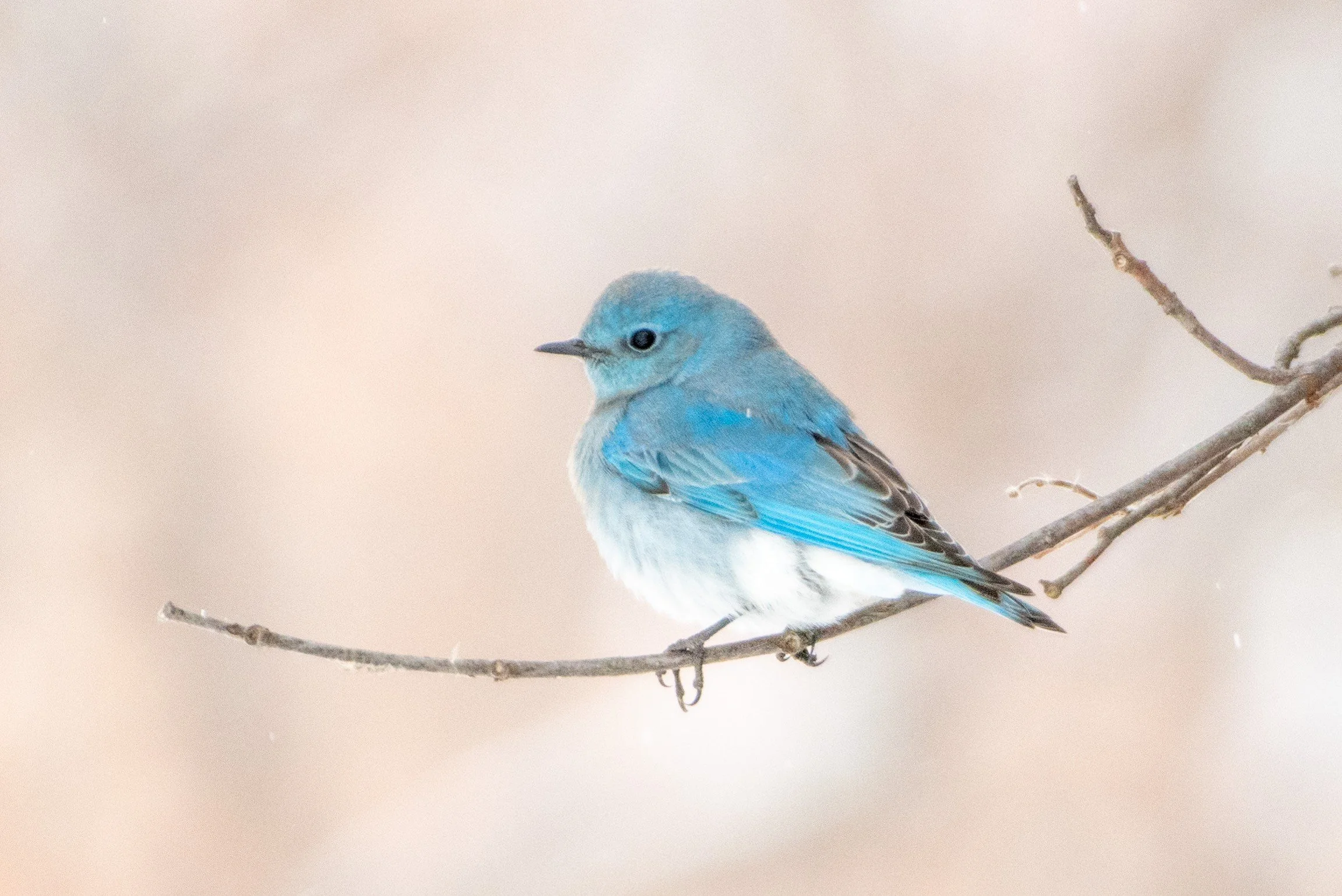
This annual tradition leverages the counties adjacent to Lake Superior – St. Louis, Lake, and Cook. In two ways. Migrating loons, grebes, and diving ducks use the lake as a stopover. More importantly for birders, the size of the lake creates a barrier during migration. Prevailing winds carry birds south and east from Canada and the western US where they encounter the lake. Rather than fly over a large water body they funnel down the lake towards Duluth. Hawk Ridge has been documenting this migration pattern for years, but passerines are also impacted. Rarities, like last year's Black Pheobe and Mountain Bluebird, blow in and hang out. At that same time northern birds are available – Bohemian Waxwing, Spruce Grouse, and others. This popular trip often yields surprising results. (Base: Tofte.)
November 21-22-23 / Mississippi River Valley / $45.00 per day
Last year Kim resurrected this trip as part of his 40th year anniversary schedule. Southeastern Minnesota counties – Wabasha, Winona, Houston – are part of the Mississippi River flyway – particularly for waterbirds. Thousands of Tundra Swans are present. Geese and ducks fill the backwaters and levees. Raptors take advantage of a ready food supply. Golden Eagles are possible away from the river in the Driftless region as are other good woods birds including last year’s Townsend Solitaire. (Base: Le Crescent.)
2027
January 9-10-11 / Duluth/Northeastern MN / $45.00 per day
Owls are the main attraction at this time of year in St. Louis, Lake, and Cook Counties. The species and quantities vary from year to year, so Sax-Zim is always a destination. However, Black-backed and American Three-toed Woodpecker sightings have increased substantially perhaps as a result of the Brimson Road forest fire and spruce budworm outbreak. Black-billed Magpie can be found as can several species of raptors. Duluth, Two Harbors, and even Grand Marias can provide interesting waterfowl – Harlequin and Long-tailed Duck, and Barrow’s Goldeneye were all present in 2025. And maybe Snowy Owls will return to the airport and ice in the Duluth Harbor. (Base: Duluth.)
Summer MBWednesdays schedule
Registration starts on April 20
July 8 / Hennepin County (p. 299) / $25.00 per day
Hennepin County is the most populous county in Minnesota and spans a total area of approximately 607 square miles. It is frequently birded, especially in the south and east. Our goal is to explore the western and northern portions of this diverse county. There are interesting places outside the metro with regional parks, WMAs and SNAs to explore. Breeding birds will be feeding young. Resident sparrows, thrushes, and swallows will be on territory. Predators needing to feed their young will also be looking for meals including Cooper's Hawk, Merlin, and Peregrine Falcon. Craig Mandel and John Quinn both live in the county so you can double your confidence in finding good birds. (Base: TBD)
July 15 / Sherburne County (p. 327) / $25.00 per day
Well known for the National Wildlife Refuge we will also search other good locations as including walking trails for American Woodcock and looking and listening for nesting warblers, Bobolinks, Dickcissel, several species of sparrows and wading birds. We may be able to observe Sandhill Crane with colts. Eastern Whip-poor-will in Ann Lake Campground is possible if we’re early enough or stay up late enough as we approach the summer solstice with long daylight hours. (Base: Princeton.)
August 5 / Dakota County (p. 275) / $25.00 per day
Dakota has diverse habitats bordered and bisected by many rivers and streams including the Mississippi and Minnesota Rivers. Great habitat abounds. Dakota county deserves multiple days so our day will be hard choices between good and better birding opportunities. Tufted Titmouse and Blue Grosbeak are regular summer birds, as are Sora and Virginia Rails, and all of the herons and bitterns. Early fall migration could bring shorebirds provided a few locations have suitable habitat. (Base: TBD.)
August 19 / Ramsey County (p. 306) / $25.00 per day
At 170 square miles Ramsey is the smallest county in Minnesota. Compare that to St. Louis County at 6860 square miles. The good news is that this will allow us to spend more time at choice locations searching for resident species. With a border defined by the Mississippi River and its bottomlands we’ll have plenty of places to look for Prothonotary Warblers, herons and egrets then we’ll visit several parks with grassland and woods to search for sparrows, cuckoos, Eastern Meadowlarks, Dickcissel, and Red-shouldered Hawks. This is Frank Forsberg’s home county, so we’ll have local intel to help us find great birds. (Base: TBD.`)